
Natural Stone vs. Porcelain Slab: Choosing the Right Surface
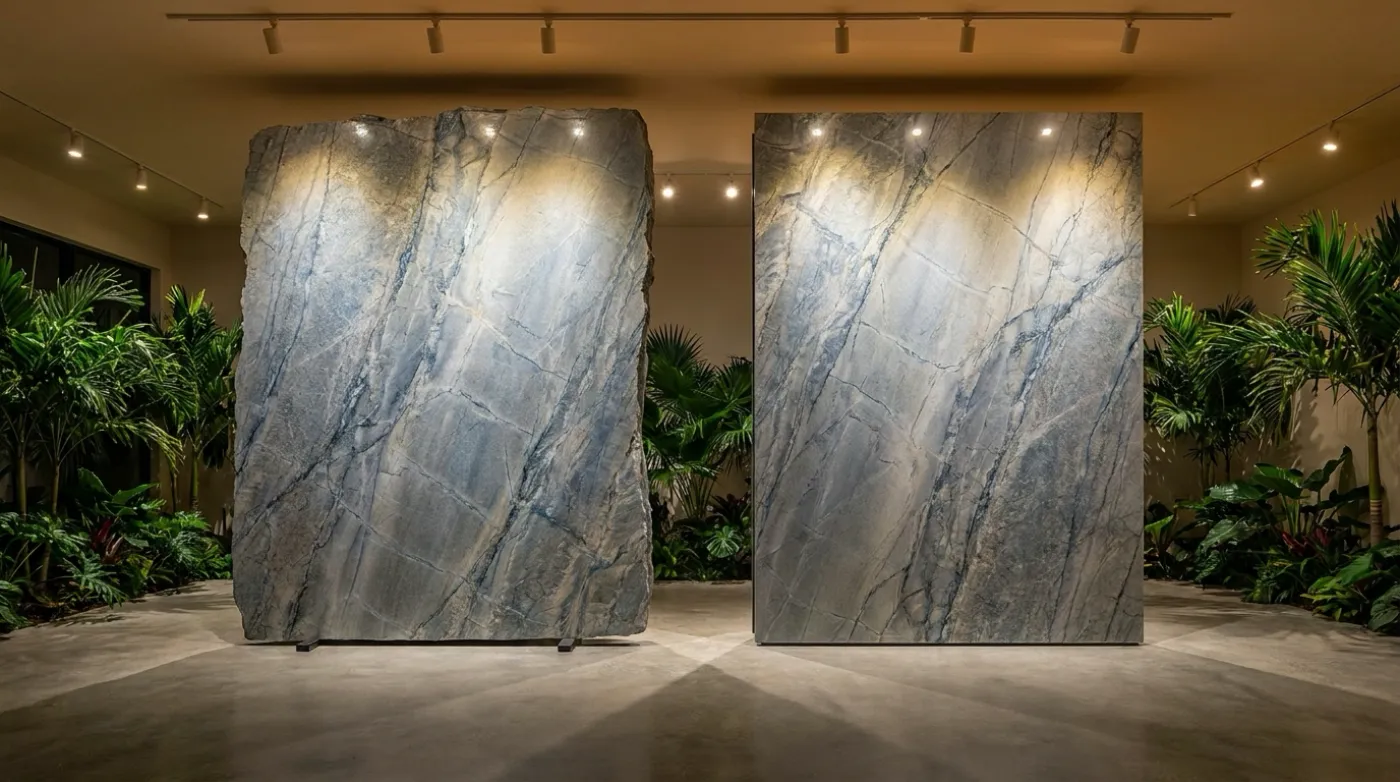
Porcelain slab miami searches reflect a growing reality: large-format porcelain has become a serious option for luxury surfaces, and specifiers want to know how it stacks up against natural stone. Both materials have a genuine place in high-end projects, and the best specifications use each where it performs. This guide compares natural stone and porcelain slabs across the factors that matter, then shows how ARCA supplies both to Miami projects with the expertise to choose well.
What Each Material Is
Natural stone, including marble, quartzite, and travertine, forms in the earth over millennia, with unique veining in every slab. Porcelain slabs are engineered from refined clays and minerals, fired at high temperatures, and finished with surface designs that can convincingly echo stone. Large-format porcelain comes in oversized sheets that suit expansive, low-seam applications.
The choice is not which material is better in the abstract, but which fits a given surface and the project's priorities.
Authenticity and Look
Natural Stone
Natural stone delivers genuine depth, translucency, and one-of-a-kind veining. For hero surfaces, an island, a feature wall, a primary bath, that authenticity resonates with clients and cannot be fully reproduced. Each slab is a unique geological record.
Porcelain Slab
Porcelain offers consistent, repeatable patterns and can mimic marble and stone looks well across large areas. It lacks the genuine depth of natural stone, yet its consistency suits projects that want uniformity across big runs.
For the moments that define a luxury space, natural stone leads on authenticity. For broad, consistent coverage, porcelain performs.
Durability and Performance
Porcelain Slab
Porcelain is non-porous, highly resistant to stains, scratches, heat, and UV fading, and requires no sealing. These traits make it excellent for hard-working surfaces, outdoor applications in sun, and high-traffic commercial areas.
Natural Stone
Performance varies by type. Quartzite is exceptionally hard and durable; granite is dense and resilient; marble and travertine are beautiful and benefit from sealing and appropriate care. Matching the stone to the use is the key, and it is where ARCA's guidance earns its value.
Weighing porcelain against natural stone? Schedule a Wynwood showroom visit and compare full slabs of both in person.
Large-Format Advantages
Both materials come in large formats, and the benefits are significant:
- Fewer seams across floors, walls, and counters for a cleaner, more expansive look.
- Continuous surfaces that let a pattern or veining read uninterrupted.
- Efficient coverage for big areas like feature walls and commercial floors.
Large format tile miami projects increasingly specify oversized slabs for exactly these reasons. ARCA supplies large-format natural stone and porcelain, helping specifiers choose the right material for each large-scale application.
Where Each Material Wins
- Choose natural stone for hero surfaces where authenticity and depth define the design, an island, a statement wall, a luxury bath.
- Choose porcelain for surfaces demanding maximum stain, scratch, heat, and UV resistance, outdoor kitchens, sunny terraces, very high-traffic commercial floors, and projects wanting uniform pattern across large runs.
Many luxury projects use both: natural stone where the eye lands, porcelain where performance leads. That blended approach is exactly what ARCA helps specifiers plan.
Building a surface strategy? Consult an ARCA material expert to mix natural stone and porcelain where each performs best.
Source Both Through ARCA
ARCA functions as the global curator for premium surfaces, sourcing natural stone, porcelain, wood, and high-tech materials from more than 20 countries, with over 4,000,000 square feet of inventory. That breadth means a specifier can compare natural stone and porcelain slabs side by side in the Wynwood showroom and choose based on real material rather than catalogs. The same supply chain has served projects across the Four Seasons and W Hotels portfolios.
Installation and Fabrication Considerations
Choosing between natural stone vs porcelain slab also involves practical factors at the fabrication and installation stage, and planning for them keeps a project smooth.
Large-format porcelain is hard and dense, which gives it excellent durability but calls for experienced handling and the right tooling during cutting and installation. Its consistency means layout is predictable, and its light weight relative to thickness can ease certain installations. Natural stone, by contrast, requires layout planning around each slab's unique veining, especially when a project calls for bookmatched or sequential runs, and it benefits from fabricators familiar with the specific material. Both reward working with a supplier who understands the material end to end.
This is where sourcing from a single curator pays off. Because ARCA supplies both natural stone and porcelain and knows the characteristics of each, the team can advise on thickness, format, and handling so the material reaches fabrication ready to perform. That guidance reduces surprises and keeps the installation aligned with the design intent.
Budgeting Across Both Materials
A smart surface strategy also balances budget across the two materials. Natural stone, particularly rare marbles and exotics, commands a premium that suits hero surfaces, while porcelain can deliver durable, attractive coverage across larger or harder-working areas at a different price point. A project might invest in a dramatic natural stone island and feature wall, then specify large-format porcelain for an outdoor kitchen, a sunny terrace, or extensive commercial flooring where its resistance to stains, scratches, heat, and UV leads. Blending the two lets a specifier put the budget where authenticity matters most and performance-driven material where durability matters most. ARCA helps map this balance across an entire project, ensuring every surface gets the right material for both its use and its place in the budget.
Matching the Decision to the Project Type
The right answer in the natural stone vs porcelain slab question often depends on the project type as much as the individual surface. A high-end residential interior, where clients live closely with their materials and value authenticity, typically leans toward natural stone on hero surfaces, with porcelain reserved for outdoor and utility areas. A hospitality or commercial project, facing heavy traffic and demanding maintenance standards, may lean more on porcelain for durability while using natural stone in signature guest-facing moments. An outdoor kitchen or sun-drenched terrace favors porcelain for its resistance to UV, stains, and weather, while a formal indoor space favors the depth of natural stone. Thinking through the project's use, audience, and exposure clarifies where each material belongs. ARCA's material experts bring this lens to every specification, helping a project balance authenticity and performance across its full scope rather than defaulting to one material everywhere. That tailored approach is what produces surfaces that look right and last.
Choose the Right Surface for Each Space
Natural stone vs porcelain slab is not an either-or for most luxury projects. Natural stone delivers authenticity for the surfaces that define a space; porcelain delivers maximum performance where durability leads; large formats benefit both. With premium material and expert guidance from ARCA, a specifier gets the right surface in every space.
Explore the digital slab catalog to preview current natural stone and porcelain availability, then book a Wynwood showroom visit to compare both in person.